Click flag to translate
Metshina Village Surrounded by Terraced Rice Fields in Bhutan
 
geography
 

Bhutan is a landlocked country about 300km long and 150km wide, encompassing 16,500 sq. km. Tibet bound it on the northwest. The rest of the country is surrounded by India : on the east by the state of Arunachal Pradesh, on the south by Assam and West Bengal and on the west by Sikkim . Tibet 's Chumbi valley, the old trade and expedition route from India to Lhasa , lies between the northern parts of Bhutan and Sikkim . Beginning in 1921, British Everest expeditions travelled to the mountain via the Chumbi valley and remarked on the beauty of the sacred Bhutanese mountain of Jhomolhari , which towers over the valley.

Virtually the entire country is mountainous, and ranges in elevation from 100m to the 1554m Kulha Gangri peak on the Tibetan border. It can be divided into three major geographic regions, from north to south: the high Himalayan of the north, the hills and valleys of the centre, and the foothills and plains of the south.


The Great Himalaya


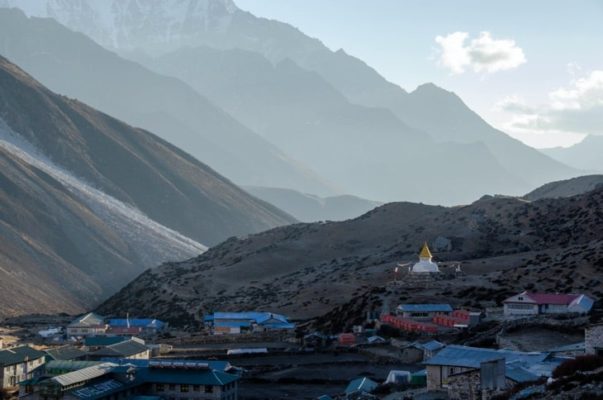
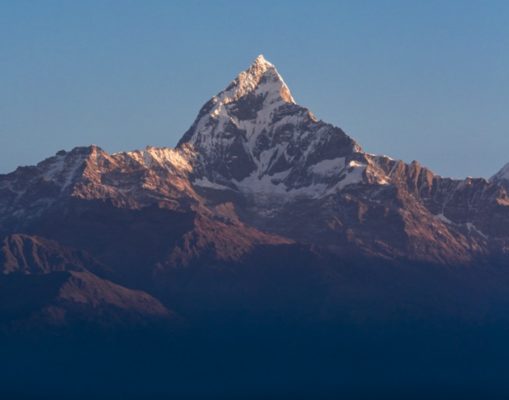
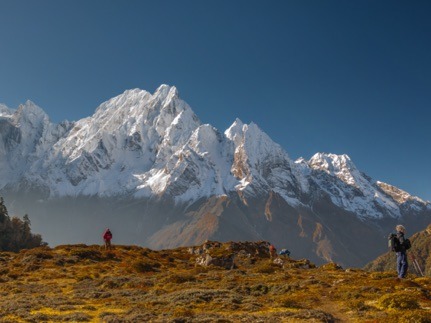
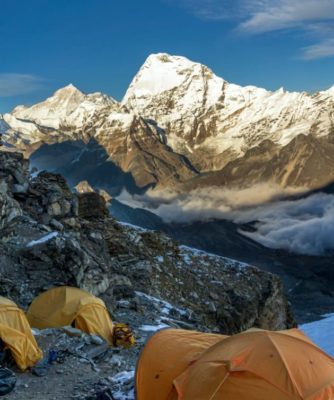
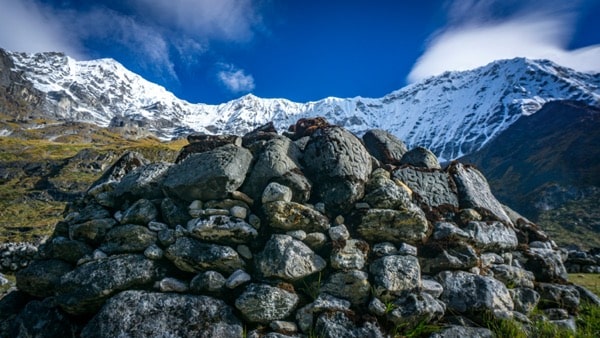
A range of high Himalaya peaks divides Bhutan and Tibet and forms part of the northern and western borders of the country. These giant peaks are the thrones of the gods; almost none have been climbed, many are virtually unexplored and some are not even named. There are four high mountains pass that cross the Himalaya . For the most part it remains an impenetrable snow-clad barrier (20% of the country is under perpetual snow). The Himalayan range extends from Jhomolhari (7314m) in the west of Kulha Gangri, near the centre point of the northern border. A chain of lower peaks extends eastward from Kulha Gangri to the Indian state of Arunachal Pradesh.

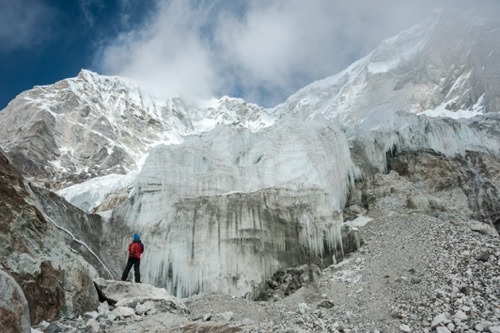
The Lunana region, just south of the mid-point of Bhutan's border with Tibet , is an area of glacial peaks and high valleys, which are snowbound during the winter. A range of high peaks forms the southern boundary of Lunana and isolates it from the rest of the country


The Inner Himalaya


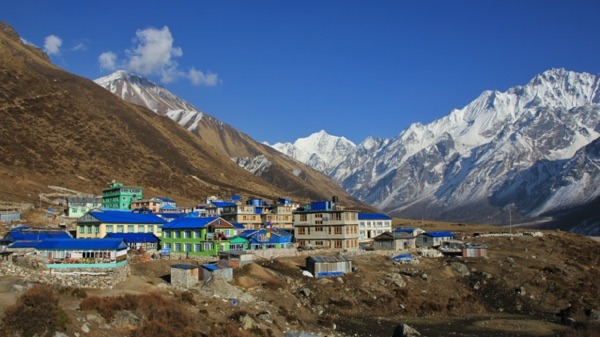
South of the high peaks lies a maze of broad valley and forested hillsides from 1100m to 3000m in elevation. This is the largest region of Bhutan and all the major towns, including Thimphu , are here. Deep ravines formed by fast-flowing rivers that have their source in the high Himalaya cut this part of Bhutan. The hillsides are generally to steep for farming; most have remained covered in virgin forest. Significant differences exist in this region between the western and eastern parts of the country.

The Himalayan range forms the West The greater part of Bhutan's western border, including the peaks of Jhomolhari and Jichu Drake. Several forested ridges extend eastward from this range, and these define the large valleys of Thimphu, Paro, Ha and Samtse. Between Punakha and Thimphu lies a well-defined ridge that forms the watershed between Thimphu's Wand Chhu river and Punakha's Puna Tsang Chhu. The east-west road crosses this ridge through a 3050m pass, the Dochu La. The Black Mountain ranges lies to the east of the Puna Tsang Chhu watershed, forming the major barrier between eastern and western Bhutan. Pele La (3500m) is the most important pass across the Black Mountains and was an important mule track before the road was constructed.

Central Bhutan A north-south range of hills separates the Trongsa and Bumthang valley systems. The road crosses this ridge via Yotong La (3425m). The southern part of central Bhutan is the ancient kingdom of Khyeng. Further east, the Donga range of hills separates Bumthang from Lhuentse, with Thrumshing La (3780m) as the crossing point for the road. Eastern Bhutan, which encompasses most of the Manas Chhu watershed, lies to the east of this range. The east Thrumshing La provides the only road access across the Donga range, which drops precipitously on its eastern side to the Kuri Chhu. The steep Rodang La Crosses the northern part of this range and there is still used by herders. The northern region just east of the Donga range is known as Kurtoe.


The Southern Foothills


The plains in the south of the country are part of the region known as the Terai, which extends from Kashmir, through Nepal, to Bhutan. The foothills rise swiftly from the plains, and except for a very narrow band of flat land, this part of the country is either forest or terraced farmland. The Duars At the south of Bhutan the hills end abruptly and the Indian plain begins. The fertile valleys that extend 15-30km from the hills to the Indian states of Assam and Bengal are known as the duars, as are the lower portion of Bhutan's foothills .


Rivers


Rivers play an important role in Bhutan's geography and their enormous potential for hydroelectric power has helped shape the economy. Flowing south, they have created deep valleys, making all east-west travel a tedious process of climbing over hills, descending to a river and climbing again to the next ridge. There are four major river systems in Bhutan, most known by several names as they flow through the country. A few rivers retain their names when they are joined by a large tributary, but more often when two rivers join the larger river is known by a completely different name, such as the Manas, which is formed by the Kuri Chhu and the Drangme Chhu. Many rivers are known by entirely different names once they flow into India.

Most of the rivers have their headwaters in the high mountains of Bhutan, but the Himalaya is not a continental divide, and there are three rivers that actually flow through the mountains into the country. The Amo Chhu flows from Tibet's Chumbi valley across the southwestern corner of Bhutan, where it becomes the Torsa Chhu, and exits at Phuentsholing. Two tributaries of the Manas, in eastern Bhutan, originate outside the country. The Kuri Chhu has its headwaters in Tibet (where it is known as the Lhobark Chhu) and crosses into Bhutan at an elevation of only 2600m; the other tributary, the Gemri Chhu, rises in India's Arunachal Pradesh.

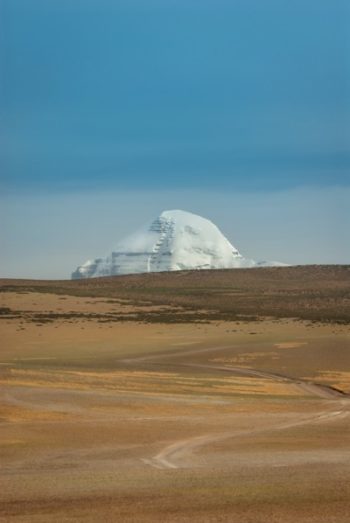
The Thimphu Chhu, known in its lower reaches as the Wang Chhu, powers the Chhukha hydroelectric project and eventually becomes the Raidak River in India. The Pho Chhu and Mo Chhu join at Punakha to form the Puna Tsang Chhu, which drains the area between the Dochu La and the Black Mountains. This river is known as the Sankosh when it reaches India. The Manas is Bhutan's largest river, draining about two-thirds of the country; in its upper reaches it is known as the Drangme Chhu. The Mangde Chhu flows from Trongsa and joins the Manas Chhu just before it flows into India. Unlike most other rivers that flow from Bhutan into India, the Manas retains its original name when it crosses the border. All of Bhutan's rivers eventually flow through the duars to become part of the Brahmaputra, which is known in Tibet as the Yarlung Tsampo, with a source near Mt. Kailash in the far west.

Because the central Himalaya of Bhutan receives the full brunt of the monsoon, Bhutan's rivers are larger and have created much broader valleys than rivers further to the west in Nepal and India. In their upper reaches, most Bhutanese rivers have created large fertile valleys such as those of Paro, Punakha, Thimphu, Ha and Bumthang. As the rivers pass through the centre of Bhutan. The valleys become steeper and narrower, and roads have to climb high on the hillside. In eastern Bhutan the Manas valley is generally broader, and some roads run alongside the river itself.

When they reach the plains, the rivers drop much of the glacial silt they have collected and follow a meandering course over gravel stream beds. There are several oxbow lakes in the plains where rivers have changed their course over the years.


Geology


Millions of years ago the space Bhutan occupies was an open expanse of water, part of the shallow Tethys Sea, and the Tibetan plateau, or 'roof of the world', was beach-front property. Some 60 million years ago, however, the Indo-Australian plate collided with the Eurasian continent and was pushed under Eurasia. The Earth's crust buckled and folded, and mountain building began. Ancient crystalline and sedimentary rocks were pushed upward, and then folded into great ridges.

The new mountains blocked off rivers that once flowed unimpeded from Eurasia to the sea. However, on the southern slopes of the young mountains, new rivers formed as moist winds off the tropical sea were forced upward until they cooled and shed their moisture. As the mountains continued to rise and the gradient became steeper, these rivers cut deeply into the terrain. The continual crunching of the two plates, augmented by phases of crustal uplifting, created additional new mountain ranges; once again the rivers' courses were interrupted and a few east-west valleys evolved.

Google


© Copyright 2007, Rath Nepal
Site Developed by: Pabitra,
webmaster@magical-nepal.com